Asymptomatic hydroxychloroquine retinopathy
This 60-year-old lady was offered OCT as part of a routine sight test. She was asymptomatic.
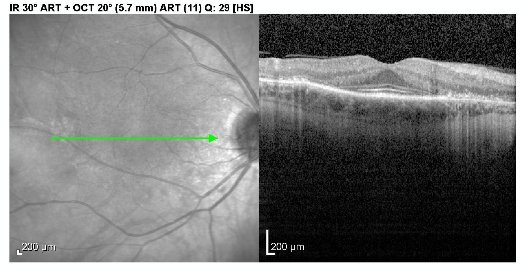
OCT right macula
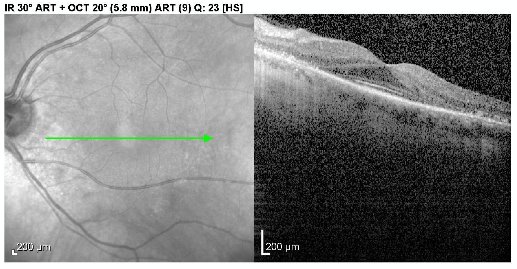
OCT left macula
Macular OCT showed bilateral, symmetrical loss of the parafoveal outer retinal layers with preservation of the ellipsoid zone at the fovea.
This patient had been taking hydroxychloroquine for the treatment of lupus for 15 years and the OCT changes are consistent with hydroxychloroquine retinopathy. The patient was reviewed in the eye clinic where she was found to have normal visual fields and colour vision. Hydroxychloroquine was stopped after discussion with her rheumatologist.
Hydroxychloroquine is known to cause macular toxicity in some patients, particularly after prolonged use, and screening guidelines were published by the Royal College of Ophthalmologists in 2018.
If advanced, hydroxychloroquine retinopathy can cause symptoms of loss of peripheral vision, and then in later stages, central vision can become affected too. In severe cases, it can result in permanent loss of sight in both eyes that can impact quality of life and activities such as driving and reading. Once hydroxychloroquine retinopathy results in noticeable loss of vision, the damage to the retina is permanent and often continues to worsen even if the medication is stopped.